This week, I read Marilynne Robinson’s Home, a book I’ve read five or six times in the past few years.
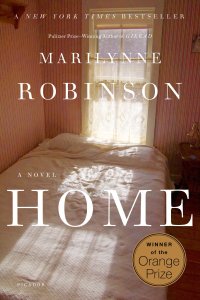
This week, I read Marilynne Robinson’s Home, a book I’ve read five or six times in the past few years.
A couple years ago, a friend told me to read Sheldon Vanauken’s A Severe Mercy, and I finally got around to it. I mostly found Vanauken’s “pagan love” disturbing, but I appreciate the following rule in his marriage:
Over-valued possessions, we decided, were a burden, possessing their owners. We decided to own nothing we couldn’t be comfortable with […] This idea of the burden of possessions we held to–and years later when we got our first glossy new car, we hit it severely with a hammer to make it comfortably dented. (33)
While I was traveling over Easter, I read Christian Wiman’s My Bright Abyss because my colleague and students have long talked about this book, and I finally decided that I need to know something about it. Here’s a passage I appreciate:
What we call doubt is often simply dullness of mind and spirit, not the absence of faith. (77)
This semester, I read Annie Dillard’s delightful little book, The Writing Life (1989), and I love how she connects her vocation as a writer to the question of human flourishing, which is evident in this passage:
What then shall I do this morning? How we spend our days is, of course, how we spend our lives. (32)
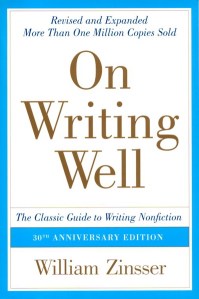
I’m teaching this classic text in my Advanced Composition course, and I love the following sentence for its simplicity and directness:
Few people realize how badly they write. (17)
Recently, I read Iris Murdoch’s The Nice and the Good (1968). The style and the characters are very British, which was probably good for me since I prioritize American literature in my reading. I enjoyed this book’s appropriation of the “descent into hell” tradition when one of the characters, a Holocaust survivor, says the following:
I doubt if the descent into hell teaches anything new. It can only hasten processes which are already in existence, and usually this just means that it degrades. (283)
Over spring break, I read Truman Capote’s In Cold Blood–because it is famous and because it is about events that occurred in rural Kansas. It is beautifully written and reads like a novel. I loved the conclusion, wherein Dewey visits the graves of the deceased and meets “such a young woman as Nancy might have been” (343).

I’ve been reading Oedipus the King for my Introduction to Literature course, and I’ve enjoyed the way Creon functions as a foil of Oedipus, particularly his wise words in this line:
I don’t know; and when I know nothing, I usually hold my tongue.
Last week, I read two of Sherman Alexie’s books, Flight and The Absolutely True Diary of a Part-Time Indian. I enjoyed both books, and I’m considering teaching one of them in the fall semester. Here’s a favorite line from Flight, which expresses how Alexie manages to convey both the depravity and goodness of human nature:
I am surrounded by people who trust me to be a respectful stranger. (159)

I’ve been enjoying this book, particularly putting Nault in conversation with other writers I’m teaching this semester, such as Kathleen Norris and Wendell Berry.
 Rachel B. Griffis