Losing Sleep Over a Book

Last week, I read a book published last year, Station Eleven, and I had the pleasant experience of being drawn into a story and losing sleep until I finished it. I’ve included a few passages that I’ve enjoyed thinking about.

So this is how it ends, she thought, when the call was over, and she was soothed by the banality of it. You get a phone call in a foreign country, and just like that the man with whom you once thought you’d grow old has departed from this earth. (30)

Because survival is insufficient. (58)

These people you coach, do they ever actually change? I mean, in any kind of lasting, notable way? (162)

Don’t think of that unspeakable decision, to keep the jet sealed rather than expose a packed airport to a fatal contagion. Don’t think about what enforcing that decision may have required. Don’t think about those last few hours on board. (249-50)

[S]he could have told him what she knew: it is possible to survive this but not unaltered. (296)

Primo Levi

Last week, I taught Primo Levi’s memoir, Survival in Auschwitz, and I felt challenged to find a way to teach this book that aligns with the purpose put forth in the preface:

The story of the death camps should be understood by everyone as a sinister alarm-signal.

Primo-Levi-007

Gilead

A chapter I wrote about Marilynne Robinson’s Gilead and two nineteenth century novels was published recently, and so I’m posting my favorite excerpt from Gilead.

I can tell you this, that if I’d married some rosy dame and she had given me ten children and they had each given me ten grandchildren, I’d leave them all, on Christmas Eve, on the coldest night of the world, and walk a thousand miles just for the sight of your face, your mother’s face….Those kind Boughton brothers and sisters would be ashamed of the wealth of their lives beside the seeming poverty of Jack’s life, and he would utterly and bitterly prefer what he had lost to everything they had….And old Boughton, if he could stand up out of his chair, out of his decrepitude and crankiness and sorrow and limitation, would abandon all those handsome children of his, mild and confident as they are, and follow after that one son whom he has never known, whom he has favored as one does a wound, and he would protect him as a father cannot, defend him with a strength he does not have, sustain him with a bounty beyond any resource he could ever dream of having. If Boughton could be himself, he would utterly pardon every transgression, past, present, and to come, whether or not it was a transgression in fact or his to pardon. He would be that extravagant. That is a thing I would love to see.

Little Women and Habits of Vice and Virtue

At the conference I attended last weekend, I heard a presenter quote from Little Women (below), and I was struck by how the passage conveys the idea that past transgressions warn us about the kinds of habits we are building for the future. After failing to warn Amy about the thin ice, Jo says:

I’m afraid I shall do something dreadful some day, and spoil my life.

Excellent Writing

I’m getting ready to present a paper on Willa Cather’s O Pioneers! at a conference this weekend, and I’ve enjoyed rereading few phrases/descriptions that I think are particularly well-written:

Any one thereabouts would have told you that this was one of the richest farms on the Divide, and that the farmer was a woman, Alexandra Bergson.

Her mind was a white book, with clear writing about weather and beasts and growing things. Not many people would have cared to read it; only a happy few. She had never been in love, she had never indulged in sentimental reveries. Even as a girl she had looked upon men as work-fellows. She had grown up in serious times.

When Frank Shabata got home that night, he found Emil’s mare in his stable.

Tennyson and Apathy

lotos-eaters

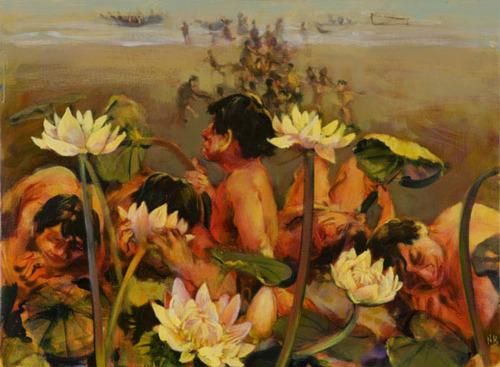
Yesterday, my British literature students taught Tennyson’s poetry to each other. The student who discussed “The Lotos-Eaters” did a fine job drawing attention to the apathy conveyed in these lines:

And sweet it was to dream of Fatherland

Of child, and wife, and slave; but evermore

Most weary seem’d the sea, weary the oar

Weary the wandering fields of barren foam.

Then some one said, “We will return no more”

Inner Freedom

man-s-search-for-meaning

The BIC class I’m teaching concludes with a Holocaust memoir (Primo Levi’s), and in thinking ahead, I’ve returned to the wonderful, well-known passage from Viktor E. Frankl’s book about inner freedom:

Seen from this point of view, the mental reactions of the inmates of a concentration camp must seem more to us than the mere expression of certain physical and sociological conditions. Even though conditions such as lack of sleep, insufficient food and various mental stresses may suggest that the inmates were bound to react in certain ways, in the final analysis it becomes clear that the sort of person the prisoner became was the result of an inner decision, and not the result of camp influences alone. Fundamentally, therefore, any man can, even under such circumstances, decide what shall become of him—mentally and spiritually. He may retain his human dignity even in a concentration camp. Dostoevski said once, “There is only one thing that I dread: not to be worthy of my sufferings.” These words frequently came to my mind after I became acquainted with those martyrs whose behavior in camp, whose suffering and death, bore witness to the fact that the last inner freedom cannot be lost. It can be said that they were worthy of their sufferings; the way they bore their suffering was a genuine inner achievement. It is this spiritual freedom—which cannot be taken away—that makes life meaningful and purposeful.

Existentialism

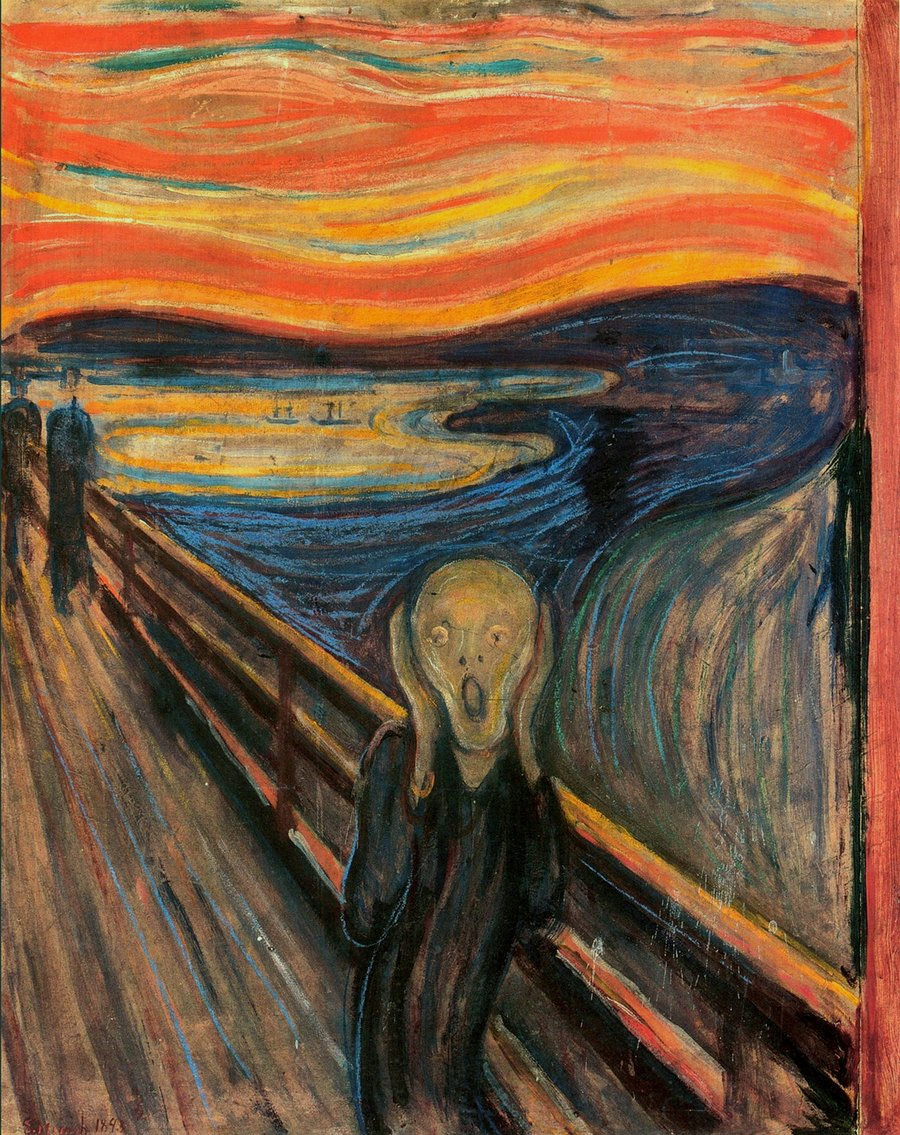
This week, we discussed existentialism in my BIC class, using the below image by Edvard Munch (completed between 1893 and 1910). Since we’ve had quite a bit of rain here lately, existentialism has been a particularly suitable topic of discussion.

The_Scream 2

Metanarratives in the 19th century

I am studying the last half of the nineteenth century with my World Cultures class, and recently we discussed the concept of the metanarrative using examples from two texts composed/published in 1848 on different continents and in different languages:

The history of mankind is a history of repeated injuries and usurpations on the part of man toward woman, having in direct object the establishment of an absolute tyranny over her. To prove this, let facts be submitted to a candid world.

     -Elizabeth Cady Stanton, “The Declaration of Sentiments and  Resolutions”

The history of all hitherto existing society is the history of class struggles.

       -Karl Marx, The Communist Manifesto

What a woman was meant to do

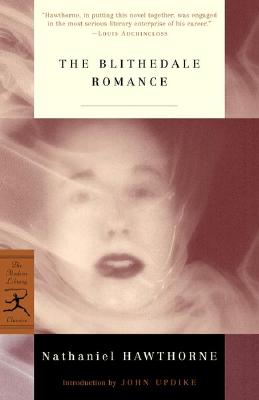
I’ve been reading Hawthorne’s The Blithedale Romance recently, and I’m struck by the way the narrator describes Zenobia’s struggle against her nature and what is expected of her. To this end, he writes,

The stage would have been her proper sphere.

Nature certainly never intended Zenobia for a cook.

blithedale