I’m leaving today for a trip (or should I say pilgrimage?), so I won’t be posting for the next two weeks, although I plan to do a lot of reading.

I’m leaving today for a trip (or should I say pilgrimage?), so I won’t be posting for the next two weeks, although I plan to do a lot of reading.
Earlier this week, I led a writing presentation/workshop for some DMin students at Truett Seminary, and as I looked through different perspectives on writing, the following have resonated with me as I work on my dissertation:
First you make a mess, then you clean it up. -William G. Perry, Jr.
Nothing outside of me had ever prevented me from writing. All of the distractions I had blamed for my lack of traction back home were no more than handy excuses for my own distracted heart. If I wanted things to change, then the place to start was from the inside out and not the other way around. -Barbara Brown Taylor, Leaving Church

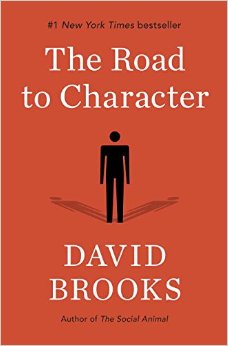 I read David Brooks’s new book, just released in April. I like how he describes himself (and consequently the impetus for his project) in the following passage:
I have lived a life of vague moral aspiration–vaguely wanting to be good, vaguely wanting to serve some larger purpose, while lacking a concrete moral vocabulary, a clear understanding of how to live a rich inner life, or even a clear knowledge of how character is developed and depth is achieved. (xiv)
I also like how he describes people he admires:
Occasionally, even today, you come across certain people who seem to possess an impressive inner cohesion. They are not leading fragmented, scattershot lives. They have achieved inner integration. They are calm, settled, and rooted. They are not blown off course by storms. They don’t crumble in adversity. Their minds are consistent and their hearts are dependable. Their virtues are not blooming virtues you see in smart college students; they are the ripening virtues you see in people who have lived a little and have learned from joy and pain. (xvi)
In the section on Frances Perkins, I’m also struck by Brooks’s discussion of her education:
Today, teachers tend to look for their students’ intellectual strengths, so they can cultivate them. But a century ago, professors tended to look for their students’ moral weaknesses, so they could correct them. (28)
Holyoke took Perkins, who had been taught, because of her sex and because of her stature, to think lowly of herself, and it persuaded her and the other women that she could do something heroic. But it achieved this task in an ironic way. It didn’t tell her that she was awesome and qualified for heroism. It forced her to confront her natural weaknesses. It pushed her down. It pushed her down and then taught her to push herself upward and outward. (30)

Yesterday I returned to Waco after spending a week reading and discussing The Divine Comedy, with a eye toward how to teach Dante, in a summer seminar at Samford University. The following are some lines from the section of Purgatorio that I taught.
On this side, it removes as it flows down / all memory of sin; on that, it strengthens / the memory of every good deed done. (28.127-29)
And a sweet melody filled the bright air— / so sweet that I reproached in righteous zeal / Eve’s fatal recklessness. (29.22-24)
he left me and let others shape his will […] / He turned his steps aside from the True Way, / pursuing the false images of good / that promise what they never wholly pay. (30.126; 129-131)
I came back from those holiest waters new, / remade, reborn, like a sun-wakened tree / that spreads new foliage to the Spring dew / in sweetest freshness, healed of Winter’s scars; / perfect, pure, and ready for the Stars. (33.141-145)

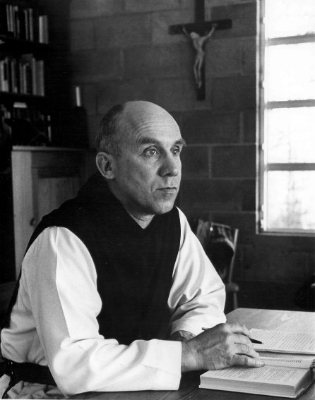
I’ve been thinking about the following passages from Thomas Merton’s No Man Is an Island on rightly-ordered love:
Freedom is perfect when no other love can impede our desire to love God.
All sin is rooted in the failure of love. All sin is a withdrawal of love from God, in order to love something else.
We are created to will what God wills, to know what He knows, to love what He loves. Sin is the will to do what God does not will, to know what He does not know, to love what He does not love.
I’m pulling together some quotations on freedom and self-government from J. Hector St. John de Crèvecoeur’s Letters from an American Farmer (1784):
Here are no aristocratical families, no courts, no kings, no bishops, no ecclesiastical dominion, no invisible power giving to a few a very visible one, no great manufactures employing thousands, no great refinements of luxury. The rich and the poor are not so far removed from each other as they are in Europe […] We are all animated with the spirit of an industry which is unfettered and unrestrained, because each person works for himself. (67)
Men are like plants; the goodness and flavor of the fruit proceeds from the peculiar soil and exposition in which they grow. We are nothing but what we derive from the air we breathe, the climate we inhabit, the government we obey, the system of religion we profess, and the nature of our employment. (71)
[H]e no sooner breathes our air than he forms schemes and embarks in designs he never would have thought of in his own country. There the plenitude of society confines many useful ideas and often extinguishes the most laudable schemes, which here ripen into maturity. Thus Europeans become Americans (82)
None among us suffer oppression either from government or religion; there are very few poor except the idle, and fortunately the force of example and the most ample encouragement soon create a new principle of activity, which had been extinguished perhaps in their native country for want of those opportunities which so often compel honest Europeans to seek shelter among us. (165)
As I enter into summer, when I have less demands on my time and therefore hope to write a lot, I’m remembering acedia, the deadly sin that tends to plague those who do mental work:
Kathleen Norris, Acedia and Me:
Acedia is a danger to anyone whose work requires great concentration and discipline yet is considered by many to be of little practical value. (43)
[We should] discern which activities foster our spiritual freedom, and which do not. I cannot watch television, for example, and write a poem. I might be inspired to pray by something I see on a news program, but this is rare. The activities I find most compatible with contemplation and writing are walking, baking bread, and washing dishes. (190-191)
C.S. Lewis, The Screwtape Letters:
I now see that I spent most of my life in doing neither what I ought nor what I liked. (Letter #12)

Last night, I returned from a family member’s funeral, the second I attended in a week’s time. So I’ve been reading poetry about grief.
The news returning each time it’s washed away. –Terence Hayes, “The Whale”
the hours and days of everyday life, something like life but only as dying is like life. –C.K. Williams, “Grief”
Not, I’ll not, carrion comfort, Despair, not feast on thee; / Not untwist—slack they may be—these strands of man / In me ór, most weary, cry I can no more. I can; / Can something, hope, wish day come, not choose not to be. -Gerard Manley Hopkins, “Carrion Comfort”
Today I submitted final grades and said good-bye to one of the busiest and most fulfilling semesters I’ve had. I particularly enjoyed teaching Jane Eyre this semester, and when I asked my students to write about which books impacted them the most, most of them agreed with me.
My favorite comment from a student this semester was inspired by this novel as well: “Jane is all up in her feelings.”

The following is a passage I found interesting this time through the novel, which is a nice expression of Jane’s self-knowledge:
As for me, I daily wished more to please him: but to do so, I felt daily more and more that I must disown half my nature, stifle half my faculties, wrest my tastes from their original bent, force myself to the adoption of pursuits for which I had no natural vocation. He wanted to train me to an elevation I could never reach; it racked me hourly to aspire to the standard he uplifted. The thing was as impossible as to mould my irregular features to his correct and classic pattern, to give to my changeable green eyes the sea-blue tint and solemn lustre of his own. (339-40)
 Rachel B. Griffis